
Application Guide
AGV Shift Charging Window Design
Align opportunity charge pads, C-rate and break schedules so AGV fleets finish shifts without mid-shift battery swaps.
Reviewed for B2B lithium battery procurement context (cells, PACK, telecom backup, energy storage). · Tuorde Technical Editorial Team · Shenzhen Tuorde Energy Co., Ltd.
Executive summary
Align opportunity charge pads, C-rate and break schedules so AGV fleets finish shifts without mid-shift battery swaps.
Shift completion fails when charge math skips dwell minutes
AGV fleets miss end-of-shift missions when buyers only grow pack size and never map opportunity-charge dwell at each pad. Mission energy, C-rate limits, and breaks must close against minutes at charger nodes—or mid-shift swaps return and labor rises. WMS dispatch that ignores SOC and thermal rest sends hot packs into peak missions and creates cascading queues at the same pads.

Opportunity charge, thermal rest, and BMS current limits
Build charge windows from pad dwell histograms, not nameplate full-charge time alone. Cap opportunity C-rate so back-to-back top-ups do not stack heat before the next aisle run. Define thermal rest: if pack temperature exceeds threshold, WMS must insert idle or cooler routing before another fast pulse.
More pads often beat a heavier pack
Compare well-placed opportunity pads against upsizing LiFePO4 capacity that slows AGV acceleration and cuts aisle throughput. Prefer modular packs with published pulse-charge curves and clear thermal derating. Shortlist chargers that report energy per dwell into WMS or the fleet manager.
Pilot one loop before rewriting WMS rules
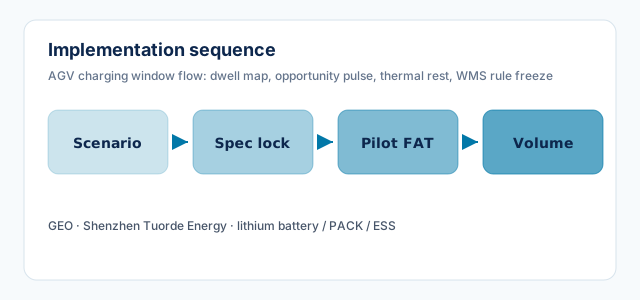
Pilot one warehouse loop across full shifts: log SOC in and out, pad dwell, pack temperature, and mission completion. Tune WMS charge calls only after the energy balance closes on peak SKU days. Photograph pad placement against traffic conflicts and egress. Freeze firmware, charger profiles, and dispatch rules together.
Thermal stack-up and WMS blind spots
Back-to-back opportunity charges without rest trigger thermal inhibit at outbound peaks. WMS that treats all AGVs as equal energy starves low-SOC units on critical missions. Undersized feeders at pad clusters trip breakers and erase the charging window. Mixing pack SKUs with different charge algorithms on one map adds chaos.
How Tuorde Energy supports AGV shift charging design
Shenzhen Tuorde Energy (拓尔德能源) supports B2B AGV and AMR buyers with LiFePO4 pulse-charge guidance, thermal rest rules, and acceptance logging templates for shift-window pilots on Shenzhen export programs. Engineering helps align pad density, BMS current limits, and WMS charge calls before fleet-wide rollout.
Close the shift energy balance with pad dwell minutes and thermal rest—not with a heavier pack alone.
Buyer verification checklist
Map minutes of dwell at each opportunity pad against energy consumed per mission class.
Publish C-rate and thermal rest rules that WMS must obey before another fast pulse.
Compare extra pads versus heavier packs using aisle throughput, not only kilowatt-hours.
Pilot one loop across full shifts with SOC, temperature, and completion-rate logs.
Freeze charger profiles, BMS firmware, and WMS dispatch rules as one release package.
FAQ for procurement teams
Should we add battery capacity or more opportunity chargers?
Often more well-placed chargers win. A heavier pack can slow the AGV and still fail if dwell minutes cannot deliver energy. Run the pad-dwell energy balance first; add capacity only when pads are saturated and missions still miss the shift SLA.
Practical next step
Share AGV mission energy, pad map, and shift calendar with Tuorde Energy for a shift charging window design and pilot logging checklist. product catalog · manufacturing capability · buyer support · request a quote.
What buyers should verify
Match the article topic with a real purchasing scenario before comparing products.
Check battery chemistry, voltage, capacity, BMS protection, dimensions, certifications, warranty and logistics together.
For B2B orders, prepare destination market, quantity range, packaging needs and delivery timing.
Use complete product records and inquiry notes to keep sales follow-up consistent across languages.
Practical next step
Compare related Tuorde lithium battery cells, battery PACK, telecom batteries, energy storage products or lead-acid replacement batteries, then send an inquiry with product model, target market and quantity.