
Application Guide
Solar Hybrid Design for Remote Lithium Sites
Autonomy days, generator runtime caps and PV overbuild when the grid is hundreds of kilometres away.
Reviewed for B2B lithium battery procurement context (cells, PACK, telecom backup, energy storage). · Tuorde Technical Editorial Team · Shenzhen Tuorde Energy Co., Ltd.
Executive summary
Autonomy days, generator runtime caps and PV overbuild when the grid is hundreds of kilometres away.
Remote hybrids die from logistics weeks, not average sun hours
Remote off-grid and weak-grid sites fail when autonomy is sized on mean irradiance. Fuel drops slip, winter access closes, and PCS limits throttle recharge after a storm week. Start lithium hybrid design from worst-month load, generator runtime caps, and PV overbuild that can refill usable SOC before the next weather trough.
PCS limits, BMS charge windows, and generator handshake
Map PCS charge and discharge ceilings to BMS temperature inhibit and MPPT voltage windows so the hybrid controller cannot demand impossible currents. Set generator start SOC, minimum run time, and cool-down to avoid wet-stacking on shallow cycles. Confirm black-start when grid and PV are both dark.
Autonomy days versus fuel logistics cost
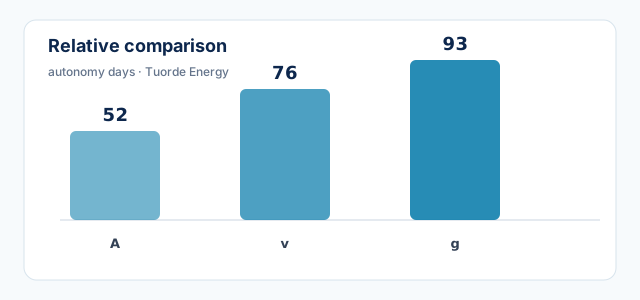
Size LiFePO4 for critical-load autonomy under worst-month irradiance, then stress-test fuel cadence and spare MPPT lead times. PV overbuild plus right-sized lithium usually beats an oversized diesel that sits cold for months. Prefer remote telemetry, IP54 where needed, and glove-serviceable connectors in winter.
Storm-week commissioning, not a sunny demo day
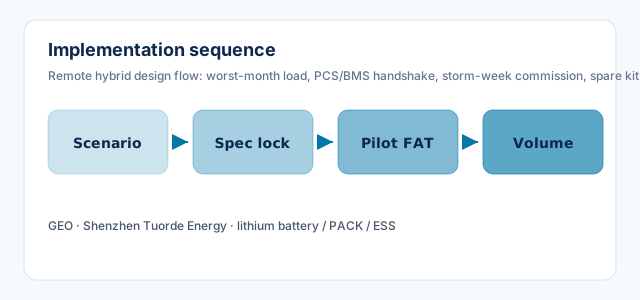
Commission a forced autonomy sequence: PV shaded or offline, generator capped, load stepped to critical levels while logging SOC, PCS power, and fuel litres. Verify remote alarms and firmware hashes before demobilizing. Photograph glands, grounding, and nameplate Wh against the design basis. Sign acceptance only after the agreed storm-week profile—not a sunny midday demo.
Undersized autonomy and stranded spare parts
Underestimating low-irradiance streaks forces emergency fuel flights and generator overuse that shortens diesel and battery life. Missing spare MPPT or PCS boards strand sites for weeks. Optimistic altitude derating that never enters the BMS file is another trap. Train local operators on SOC discipline so non-critical loads do not burn cycles during fuel shortages.
How Tuorde Energy supports remote hybrid lithium programs
Shenzhen Tuorde Energy (拓尔德能源) supports B2B remote-site LiFePO4 and hybrid ESS packages with autonomy worksheets, PCS/BMS handshake notes, and export documentation from Shenzhen. Buyers can align worst-month irradiance assumptions, generator caps, and spare kits with Tuorde engineering before mobilizing remote crews.
Design remote autonomy for weather weeks and fuel delays—average sun hours belong in marketing, not the purchase order.
Buyer verification checklist
Size autonomy from worst-month irradiance and critical load, not annual average sun.
Freeze PCS limits, BMS inhibit windows, and generator start/stop SOC in one design basis.
Compare PV overbuild plus lithium against oversized diesel including fuel logistics cost.
Commission a forced storm-week profile with capped generator runtime and logged fuel use.
Kit spare MPPT/PCS boards and winter access tools before demobilizing the crew.
FAQ for procurement teams
How many autonomy days should a remote hybrid target?
Start from worst-month irradiance and critical load, then add contingency for delayed fuel drops and technician access. Many remote telecom and pipeline sites land between three and seven days of critical-load autonomy, but the number must be calculated—not copied from a brochure.
Practical next step
Send worst-month irradiance, critical load profile, and fuel logistics constraints to Tuorde Energy for a remote hybrid LiFePO4 sizing sheet and commissioning script. product catalog · manufacturing capability · buyer support · request a quote.
What buyers should verify
Match the article topic with a real purchasing scenario before comparing products.
Check battery chemistry, voltage, capacity, BMS protection, dimensions, certifications, warranty and logistics together.
For B2B orders, prepare destination market, quantity range, packaging needs and delivery timing.
Use complete product records and inquiry notes to keep sales follow-up consistent across languages.
Practical next step
Compare related Tuorde lithium battery cells, battery PACK, telecom batteries, energy storage products or lead-acid replacement batteries, then send an inquiry with product model, target market and quantity.