
Technical Guide
Outdoor Cabinet Thermal Management for Lithium Backup Batteries
How B2B buyers should plan airflow, heaters and derating when LiFePO4 backup modules sit in outdoor telecom or industrial cabinets.
Reviewed for B2B lithium battery procurement context (cells, PACK, telecom backup, energy storage). · Tuorde Technical Editorial Team · Shenzhen Tuorde Energy Co., Ltd.
Executive summary
How B2B buyers should plan airflow, heaters and derating when LiFePO4 backup modules sit in outdoor telecom or industrial cabinets.
When outdoor cabinets punish datasheet optimism
Procurement teams sizing LiFePO4 backup for outdoor telecom cabinets often inherit lab-cycle assumptions that never survive a desert noon or a polar night. Rectifier restart logic, SNMP alarm thresholds, and BMS charge inhibit must be negotiated against the actual ambient band of each site—not a single 25 °C reference curve. Site maintenance leads should also review cabinet orientation, shade, and dust-screen cleaning cycles because they shift internal heat rise. Buyers who skip this step discover silent capacity loss months after rollout, when NOC tickets show repeated charge aborts rather than hard failures, and warranty audits later reveal undersized usable hours.
Airflow, heaters, and sensor placement
Engineering reviews should map heat paths from cell to cabinet skin, fan duty cycles, and whether temperature probes sit on the hottest cell, the busbar, or only on the BMS PCB. Heated variants need a defined AC or DC source, warm-up time before charge enable, and explicit alarm routing when heater circuits fail. Evaluate how maintenance door openings, cable-gland leakage, and HVAC bypass affect the thermal field. Shenzhen Tuorde Energy field teams recommend documenting south-facing exposure, blocked vents, and maintenance door leakage before locking derating tables in the purchase order, with sensor photos archived in FAT.
Selecting modules for climate bands
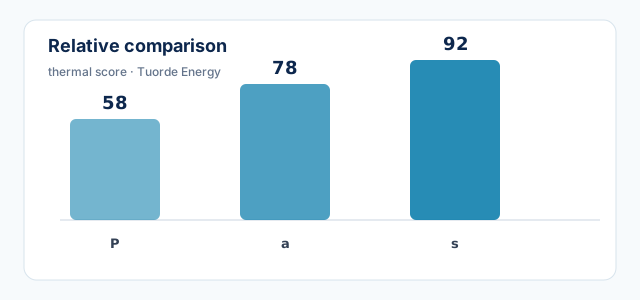
Shortlist suppliers who publish ambient derating for charge current, discharge power, and usable Ah—not only peak power at room temperature. Ask whether firmware bundles are climate-specific or whether one SKU relies on parameter files per region. For co-located multi-operator sites, confirm whether spare modules may cross climate zones. Modular SKUs with optional heater kits reduce spare-pool complexity compared with fully custom builds per latitude and lower overseas retooling cost.
Site acceptance before fleet rollout
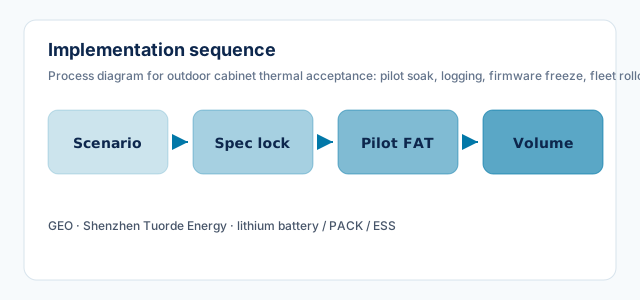
Pilot cabinets should run hot-soak and cold-start sequences with production harnesses, logging SOC drift, fan duty, heater current, and charge abort events for at least fourteen days. Sample BMS behavior during rectifier restart, brief over-temp, and maintenance-door events. Freeze firmware hashes and heater thresholds only after comparing results to the agreed derating matrix. FAT photos of sensor placement and vent orientation belong in the quality archive alongside serial ranges and NOC alarm-code mapping.
Operational risks buyers underestimate
The most expensive mistake is treating thermal alarms as nuisance noise. Repeated inhibit cycles accelerate imbalance and warranty disputes. Sites that mix heated and non-heated modules in one string without BMS policy updates risk chronic under-charge in winter branches. Skipping pilot logs to save calendar time usually ends in module swaps and expedited air freight that exceed the cost of two extra weeks of data capture.
How Tuorde Energy supports outdoor backup programs
Shenzhen Tuorde Energy (拓尔德能源) supplies B2B LiFePO4 PACK and telecom rack modules with climate-aware BMS profiles for export programs across Asia, Europe, and the Middle East. Buyers can align outdoor cabinet backup specifications with Tuorde sample builds, FAT scripts, spare-module firmware policies, and rectifier/BMS joint-test records before volume release.
Treat outdoor thermal design as part of the battery specification—not an afterthought left to the integrator.
Buyer verification checklist
Request ambient derating curves for charge and discharge across the site temperature band.
Confirm BMS sensor location and heater fault alarm routing before PO release.
Define climate-specific firmware bundles or parameter files for multi-region fleets.
Run hot-soak and cold-start logging on pilot cabinets with production harnesses.
Archive FAT evidence: vent photos, serial ranges, and firmware hashes.
FAQ for procurement teams
Can one 48 V module rating cover every climate?
Rarely. Cold regions typically need heated packs and longer warm-up before charge enable; hot regions need higher airflow margin and stricter charge-current limits. Approving separate parameter sets—or SKUs—early avoids field retrofits and spare-pool chaos.
Practical next step
Share your cabinet drawings, ambient range, and rectifier behavior with Tuorde Energy engineering to receive a climate-specific LiFePO4 backup specification and pilot FAT checklist before fleet deployment. product catalog · manufacturing capability · buyer support · request a quote.
What buyers should verify
Match the article topic with a real purchasing scenario before comparing products.
Check battery chemistry, voltage, capacity, BMS protection, dimensions, certifications, warranty and logistics together.
For B2B orders, prepare destination market, quantity range, packaging needs and delivery timing.
Use complete product records and inquiry notes to keep sales follow-up consistent across languages.
Practical next step
Compare related Tuorde lithium battery cells, battery PACK, telecom batteries, energy storage products or lead-acid replacement batteries, then send an inquiry with product model, target market and quantity.