
Buying Guide
Battery PACK IP Rating Selection Guide
Choose IP54, IP65 or higher based on washdown, dust and cable gland reality—not brochure adjectives.
Reviewed for B2B lithium battery procurement context (cells, PACK, telecom backup, energy storage). · Tuorde Technical Editorial Team · Shenzhen Tuorde Energy Co., Ltd.
Executive summary
Choose IP54, IP65 or higher based on washdown, dust and cable gland reality—not brochure adjectives.
IP numbers fail when glands and washdown decide reality
Battery PACK IP rating selection goes wrong when buyers treat IP54 or IP67 as marketing adjectives instead of enclosure test methods tied to cable exits. Washdown lines, outdoor dust, and connector sealing punish packs that passed a lab door test but used a different production gland.
Enclosure, glands, and thermal trade-offs
Engineering should verify that the claimed IP sample includes the production cable gland, connector boot, and pressure-equalization path—not a blanked prototype. Balance sealing against heat rejection: a higher IP that traps heat can force earlier charge derating on LiFePO4 packs.
Match IP to dust, washdown, and service model
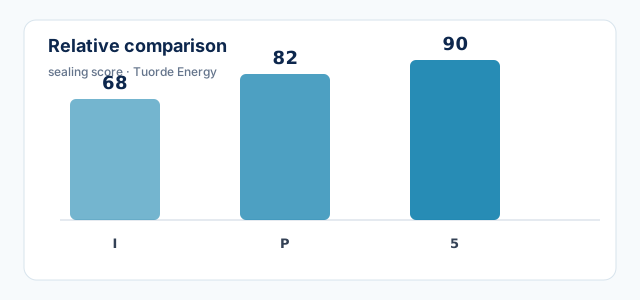
Indoor AGV routes with controlled dust may be adequate at IP54 if glands and latches are proven; washdown or coastal outdoor ESS often need IP65-class sealing and stainless hardware. Ask for the lab method, sample configuration, and whether field-replaceable harnesses keep the rating after service.
Seal evidence before volume tooling
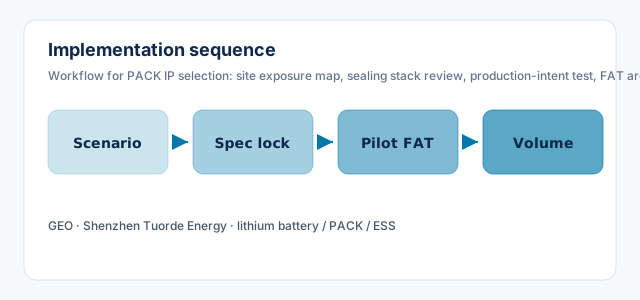
Accept with hose or dust tests on production-intent packs, leak checks at glands, and photos of torque marks on covers. Archive serial ranges with the IP test report and connector part numbers. Freeze the sealing stack—gasket, gland, and boot—only after FAT shows no moisture ingress under the agreed washdown or dust protocol, not after a brochure claim alone.
Over-sealing, trapped heat, and silent corrosion
Chasing the highest IP without a thermal path accelerates cell temperature rise and shortens calendar life. Under-specified glands create the opposite failure: slow moisture ingress that looks like random SOH loss. Silent connector swaps after PPAP break interchangeability and void the sealing story that procurement thought it bought.
Tuorde Energy guidance on PACK sealing selection
Shenzhen Tuorde Energy (拓尔德能源) supports B2B LiFePO4 PACK buyers with IP-oriented enclosure reviews, gland and harness options, and FAT photo archives for export programs from Shenzhen. Teams can align washdown or outdoor sealing assumptions with thermal derating and serviceable connector designs before volume tooling is cut.
Buy the sealing stack you will service—not an IP digit that never included your production cable exit.
Buyer verification checklist
Confirm the IP lab sample used the production gland, boot, and cable exit design.
Balance target IP against pack heat rejection and charge derating at site ambient.
Match IP54 versus higher ratings to dust, washdown, and coastal exposure reality.
Photograph cover torque marks and gland seating into the FAT archive with serials.
Forbid silent connector or gland swaps after PPAP without a formal ECO.
FAQ for procurement teams
Does a higher IP rating always mean a better battery PACK?
Not if heat cannot escape or service openings break the seal. Choose the lowest IP that survives dust and washdown with proven glands, then verify thermal derating and field-replaceable harness rules so sealing and serviceability stay aligned.
Practical next step
Share your washdown or dust profile, connector part numbers, and cabinet photos with Tuorde Energy to receive an IP-oriented LiFePO4 PACK sealing recommendation and FAT photo checklist. product catalog · manufacturing capability · buyer support · request a quote.
What buyers should verify
Match the article topic with a real purchasing scenario before comparing products.
Check battery chemistry, voltage, capacity, BMS protection, dimensions, certifications, warranty and logistics together.
For B2B orders, prepare destination market, quantity range, packaging needs and delivery timing.
Use complete product records and inquiry notes to keep sales follow-up consistent across languages.
Practical next step
Compare related Tuorde lithium battery cells, battery PACK, telecom batteries, energy storage products or lead-acid replacement batteries, then send an inquiry with product model, target market and quantity.